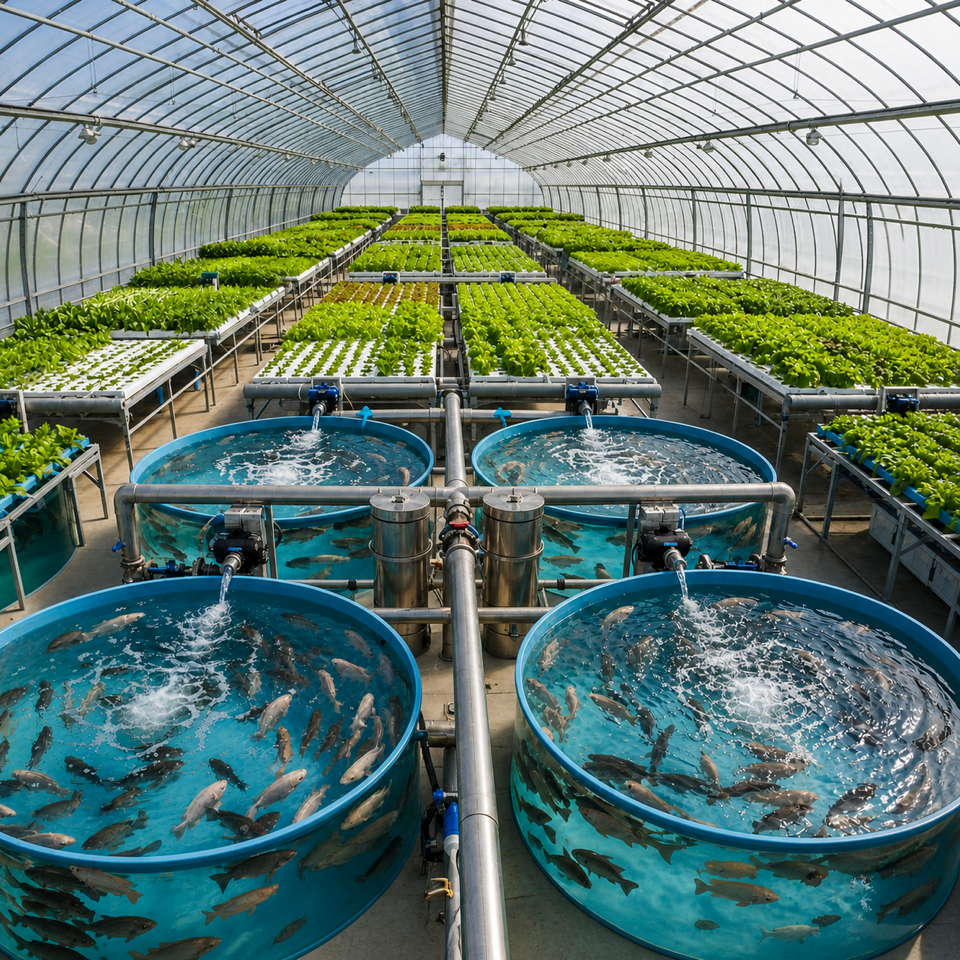
Commercialization of Urban Marine Aquaculture

Updated: Sep 30

Goal: Commercialize innovative recirculating aquaculture technologies for sustainable, land-based production of high-value marine fish.
Researchers at the University of Maryland developed and patented one of the first successful recirculating aquaculture systems (RAS) for commercially producing high-value marine fish in a completely closed, biosecure environment. The technology enables year-round production with minimal water use, eliminates effluent discharges and fish escapes, and allows facilities to operate close to major urban markets, delivering exceptionally fresh seafood while reducing environmental impacts.
The system was designed to produce gilthead sea bream (orata) and was later adapted to other premium species, including European sea bass (branzini) and Atlantic salmon. Related research also explored converting fish waste into methane, creating the potential for energy recovery and nearly closed-loop aquaculture.
TerrAqua’s role: Evaluate market opportunities, develop commercialization strategies and business plans, and position these technologies for successful commercial adoption.
Clients: The Institute of Marine and Environmental Technology, University of Maryland Baltimore County, the Abell Foundation and Maryland Sustainable Mariculture, LLC and Maryland Technology Development Corporation (TEDCO).