Integrated Desert Aquaculture and Agriculture (Southwestern United States)

Updated: Aug 11

Goal: Evaluate the feasibility of integrating aquaculture and agriculture in arid regions of the southwestern United States.
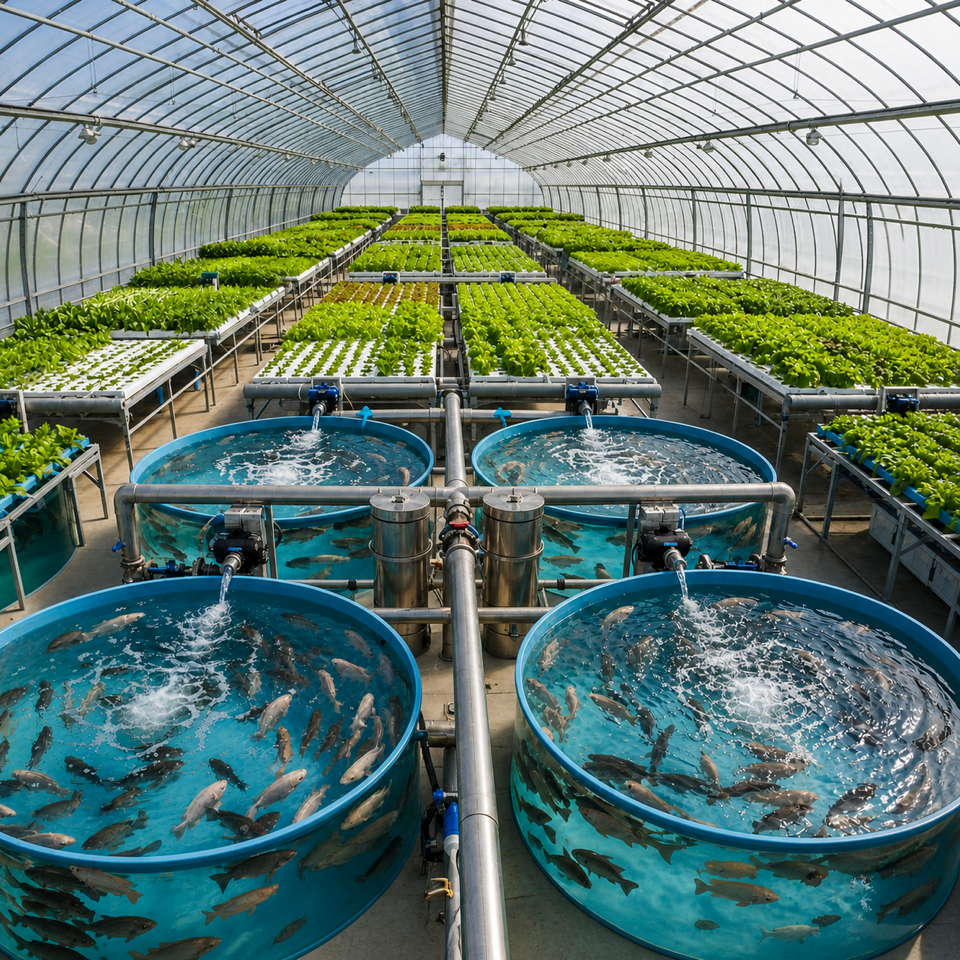
Integrated aquaculture and agriculture recycles nutrient-rich aquaculture water to irrigate greenhouse and field crops, conserving water and fertilizer while reducing production costs.
Building on successful commercial systems developed in Israel's Negev Desert, TerrAqua evaluated the potential to adapt this approach to several sites in the American Southwest.
Our assessment examined site suitability, including water availability and quality, soils, topography, climate, technical feasibility, and market potential. We also identified the additional engineering, economic, and site-specific information needed to support commercial development.
The study concluded with recommendations for detailed feasibility analyses and pilot projects to adapt proven Israeli technologies to local conditions, with the goal of creating sustainable agricultural enterprises that generate jobs, strengthen local economies, and conserve scarce water resources.
Clients: A Fortune 500 mining corporation and The Negev Foundation, in conjunction with the Ramat Negev Desert Agro-Research Center.