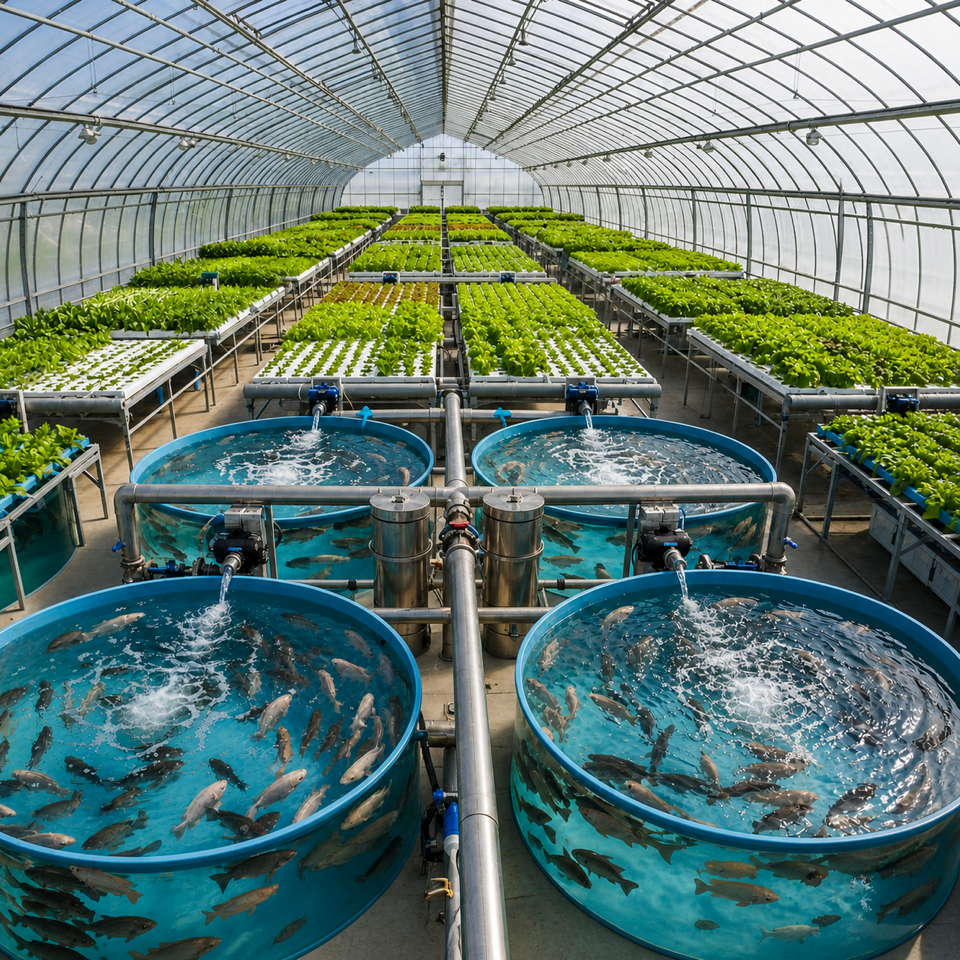
Commercial Culture of Oysters in a Recirculating Aquaculture System
- TerrAqua

- Jun 3
- 2 min read

Goal: To develop proprietary land-based aquaculture for high-quality, half-shell oysters and market them with a high margin of return.
Ocean Equities, LLC, TerrAqua, and the Institute of Marine and Environmental Technology (IMET) at the University of Maryland Baltimore collaborated on a proof-of-concept project to evaluate the commercial production of Eastern oysters in a recirculating saltwater aquaculture system. The goal was to determine whether Eastern oysters could be grown economically under tightly controlled conditions, building on earlier research demonstrating that filter-feeding bivalves—and particularly Pacific oysters—could thrive in recirculating systems.
The approach offered several potential advantages over wild harvest and conventional aquaculture. A biosecure, land-based system could produce oysters with enhanced food safety, consistent quality, and customizable taste and texture, while controlled water conditions promised significantly faster growth rates. Given the strong demand and premium prices for high-quality half-shell oysters, the technology held considerable commercial promise.
Although the project was ultimately cut short by an outbreak of oyster disease, it provided valuable insights into the technical and biological challenges of land-based Eastern oyster production. While the experiment did not achieve its commercial objectives, it advanced understanding of recirculating aquaculture systems and highlighted both the potential and the risks of applying innovative technology to shellfish production.
Earlier research demonstrated that oysters and many other filter-feeding bivalves can be reared in recirculating systems, and that Pacific oysters can be raised economically in them. This was a proof of concept to reduce the technical risk of growing Eastern oysters in IMET’s recirculating aquaculture system.
The major question addressed was whether they can be grown economically relative to other growing methods, using different feeding regimens. This technology can permit biosecure oyster production, assuring product safety for consumers, as well as oysters with a tailored taste and texture. And, because of controlled environmental conditions, they can grow much faster than conventionally cultured oysters.
The U.S. Food and Drug Administration and the Interstate Shellfish Sanitation Conference strongly support applying recirculating technology for safe, biosecure production of raw shellfish. This project was funded by the Maryland Industrial Partnerships (MIPS) program and private investment.